Another day, anothe stoker
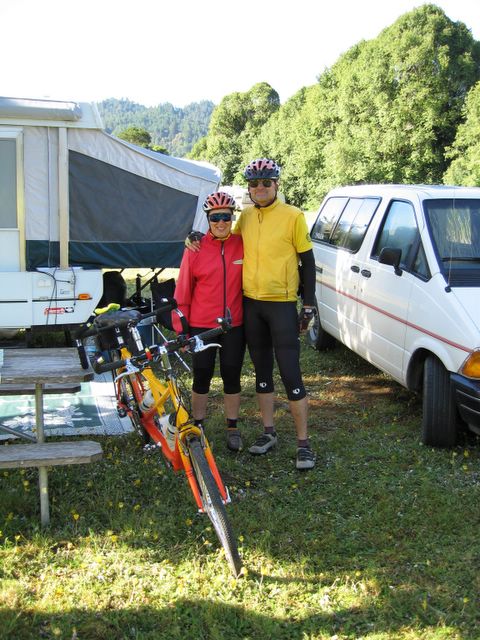
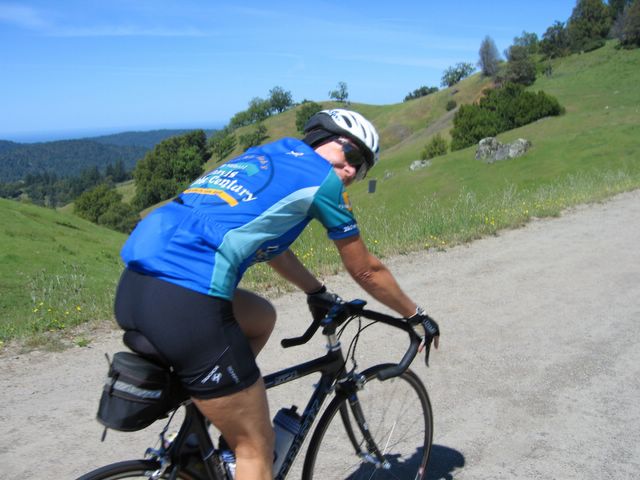
I took Christine out for a ride on the tandem yesterday. She loved it. I remember how nice it was when I first went for a ride on a good bike, and I'm sure she had a similar experience. It's always a delight to share cycling with others, and I'm beginning to realize that tandeming is one of the best ways to introduce cycling to non-cyclists: it's non-threatening, it's liberating (the other person doesn't have to steer or brake or watch for traffic), and the fact that you're a good mechanic means that the stoker also never worries about mechanicals.
Thursday, June 09, 2005


Wednesday, June 08, 2005
The Wall-Street Journal on Class Mobility
Although Americans still think of their land as a place of exceptional opportunity -- in contrast to class-bound Europe -- the evidence suggests otherwise. And scholars have, over the past decade, come to see America as a less mobile society than they once believed.
Although Americans still think of their land as a place of exceptional opportunity -- in contrast to class-bound Europe -- the evidence suggests otherwise. And scholars have, over the past decade, come to see America as a less mobile society than they once believed.
Monday, June 06, 2005
Vanguard Re-opens energy fund
It was closed in 2004 because too many people wanted in. It'll probably close again in the future. If you missed it last time, here's another chance.
It was closed in 2004 because too many people wanted in. It'll probably close again in the future. If you missed it last time, here's another chance.
Friday, June 03, 2005
The Time Traveler's Wife, Audrey Niffenbegger.
"Okay," I say, "let's see. The choices we're working with here are a block universe, where past, present and future all coexist simultaneously and everything has already happened; chaos, where anything can happen and nothing can be predicted because we can't know all the variables; and a Christian universe in which God made everything and it's all here for a purpose but we have free will anyway. Right?"
Clare wiggles her toes at me. "I guess."
"And what do you vote for?"
Clare is silent. Her pragmatism and her romantic feelings about Jesus and Mary are, at thirteen, almost equally balaned. A year ago she would have said God without hesitationl In ten years she will vote for determinism, and ten years after that Clare will believe that the universe is arbitrary, that if God exists he does not hear our prayers, that cause and effect are inescapable and brutal, but meaningless.
Niffenbegger is not a great writer, but she is a great plotter. This is one of those books you have to read twice, the first time to understand the layout, and the second time to pick up all the references that were dropped the first time --- passages in Henry/Clare's lives that didn't make sense the first time round because you were getting it out of order.
Highly recommended!
"Okay," I say, "let's see. The choices we're working with here are a block universe, where past, present and future all coexist simultaneously and everything has already happened; chaos, where anything can happen and nothing can be predicted because we can't know all the variables; and a Christian universe in which God made everything and it's all here for a purpose but we have free will anyway. Right?"
Clare wiggles her toes at me. "I guess."
"And what do you vote for?"
Clare is silent. Her pragmatism and her romantic feelings about Jesus and Mary are, at thirteen, almost equally balaned. A year ago she would have said God without hesitationl In ten years she will vote for determinism, and ten years after that Clare will believe that the universe is arbitrary, that if God exists he does not hear our prayers, that cause and effect are inescapable and brutal, but meaningless.
Niffenbegger is not a great writer, but she is a great plotter. This is one of those books you have to read twice, the first time to understand the layout, and the second time to pick up all the references that were dropped the first time --- passages in Henry/Clare's lives that didn't make sense the first time round because you were getting it out of order.
Highly recommended!
Wednesday, June 01, 2005
Idlewild, by Nick Sagan
Yes, he's the son of that famous astronomer. A decent book, a bit disjoint, and while it has a few interesting idea, is a bit staid. An obvious first novel.
They're gone now, off chasing a better tomorrow. I told them I wouldn't actively oppose them. It's a truce.
I'm alone with my thoughts.
I said I had nothing left... but that's not true.
Even with a shattered memory, I still have hindsight. With perfect clarity, I can see what made me the way I am. I can't see forward, but I can see the path back.
Yes, he's the son of that famous astronomer. A decent book, a bit disjoint, and while it has a few interesting idea, is a bit staid. An obvious first novel.
They're gone now, off chasing a better tomorrow. I told them I wouldn't actively oppose them. It's a truce.
I'm alone with my thoughts.
I said I had nothing left... but that's not true.
Even with a shattered memory, I still have hindsight. With perfect clarity, I can see what made me the way I am. I can't see forward, but I can see the path back.
Sunday, May 29, 2005
The World is Flat, by Thomas Friedman
As the saying goes: If you want to live like a Republican, vote like a Democrat---take god care of the losers and left-behinds. The only way to be a flatiest is to be a compassionate flatiest.
There are a lot of obvious things in this book, and Friedman chooses to emphasize them rather than the unobvious things, such as the fact that increasing inequality will make it harder for political leaders to keep tariffs low or push for free trade. Things like National Healthcare systems actually promote entrepreneuralship, which is another thing that Friedman doesn't get into.
I don't feel like I've wasted my time with this book, but I didn't come away knowing more than I did before reading it, either.
As the saying goes: If you want to live like a Republican, vote like a Democrat---take god care of the losers and left-behinds. The only way to be a flatiest is to be a compassionate flatiest.
There are a lot of obvious things in this book, and Friedman chooses to emphasize them rather than the unobvious things, such as the fact that increasing inequality will make it harder for political leaders to keep tariffs low or push for free trade. Things like National Healthcare systems actually promote entrepreneuralship, which is another thing that Friedman doesn't get into.
I don't feel like I've wasted my time with this book, but I didn't come away knowing more than I did before reading it, either.







Subscribe to:
Comments (Atom)


