For as long as the Virgin Mobile LG Optimus V was at $149.95, it had been sold out. One lucky evening when I saw it available on the web-site, I bought it for XiaoQin to replace the T-mobile Blackberry she'd been using (with only a voice plan) when her primary phone broke. Target was even running a special for a while when the phone was at $129.95 with a $20 credit.
The phone arrived and it activated smoothly and quickly. I immediately used Square to sell a book at an event, which demonstrated that the dataplan was working. XiaoQin got the number ported within 3 hours, but it took a phone call to figure out how to reconfigure the phone for service. After this, I realized that porting her old T-mobile number to Virgin was a mistake: we should have shelled out $25 to port her T-mobile number to Google voice instead!
The phone is a 600MHz phone, or about as slow as the original Droid. It runs Android 2.2, which meant that voice actions, navigation, and all the other goodies that Apple fanboys are missing come standard and works well. It's a bit too slow to run Angry Birds, but the more optimized Angry Birds Rio runs well. Like the original Droid, it's battery would last a day, so you have to charge it every night. The UI outside of Angry Birds is extremely responsive, more responsive than the original droid, without the occasional pause that cause me to have to reboot my 2.3 Nexus One.
The big feature of the Optimus V is Virgin's Beyond Talk plan: $25/month prepaid for unlimited data and 300 voice minutes. At this rate, the phone pays for itself over a T-mobile voice plan in 10 months. For a geek who hardly ever uses the phone, this is a huge feature. While others report that the Sprint network the phone uses is no good, we haven't found this to be the case. It's had voice and data whenever T-mobile has had it, and unlike an iPhone, does not drop any calls while in use as a phone.
The only thing that might give you pause is that the phone is a CDMA phone, which means it won't run anywhere in Europe, for instance. In any case, this is a phone I will seriously consider paying for when my T-mobile prepaid card runs out. Virgin Mobile has finally raised the price on the phone to $199.95 in order to keep the phone in stock and to build inventory, but if the price were to drop back down to $149.95 or even below, this phone would be highly recommended.
Monday, April 04, 2011


Sunday, April 03, 2011
Startup Recruiting
Early on in Quora's life, there were lots of questions on Quora like Who are the best engineers at Google?, and Who are the rising stars in Engineering at Google? I don't know who asked those questions, but if you're a startup recruiting engineers, those are the wrong questions to ask.
To begin with, if someone is widely recognized inside a large company, they are unlikely to leave for a startup. Lars Rasmussen, for instance, did not leave for Facebook until after Google Wave was canceled and Facebook wasn't a startup anymore. Secondly, in large organizations that are well past the startup stage, climbing the corporate ladder is as much a measure of political skill as it is a measure of engineering skill. While bringing in someone with political skill might be very useful when you're past the startup stage, at the startup stage it can be a cause of pain by adding very political people into what would otherwise be a unified team. As Sanjeev Singh once said, internalizing Tips for Noogler Engineers might make you a great corporate ladder climber but would also make you useless at a startup.
So what's the right question to ask? The right question to ask would be, Who is the most undervalued engineer at Company X? This brings up two highly desirable traits: one, the engineer probably realizes that he's undervalued (or if he doesn't realize that he would as soon as you showed him your offer), and two, the engineer's probably undervalued because he's precisely the kind of person who can't or won't play the political game highly prized in big companies. I'll lead off with two examples, both from Google.
The most undervalued engineer I know at Google was a tech lead for one of the front-ends responsible for producing most of the company's revenue when I joined. He never shirked from the grungy work of fixing up code and making things work well. He never grabbed the sexy work for himself. Whenever I saw a code review from him, I would be awed by the kind of code he produced: this was not code, this was poetry. I learned something about programming well from every code review he sent me, no matter the language or the system. People knew he was a hot-shot: he was tapped to build another critical system just prior to the IPO. After a few years at this, he moved on to several other projects. But when he came up for promotion (and his manager had to put him up for promotion (after far too long at Google), since he wasn't a self-promoter), the promotion committee sent back the feedback: "Lack of demonstrated leadership ability, and insufficient technical depth."
The second most undervalued engineer I know at Google had both his 20% projects turned into full time Google projects which launched externally to high visibility. You would recognize at least one of these products as something that lots of people used. He too, was denied for promotion once, and after he worked the system and got his promotion, said to me, "After this experience, I want nothing to do with the system." Again, he's not a self-promoter, but his track record should have spoken for itself. Given his track record, it wouldn't surprise me to see him at a startup some time in the future.
Both these men are financially independent, and are effectively economic volunteers. But I can assure you that there exist others like them, and many of them are not economic volunteers. It's actually not that hard to hunt them down, but the trick isn't to ask managers about such under-valued engineers. It's to ask the "leaf-node" engineers who do the work. Ask the right questions, and your recruiting problems for your startup will be half over.
To begin with, if someone is widely recognized inside a large company, they are unlikely to leave for a startup. Lars Rasmussen, for instance, did not leave for Facebook until after Google Wave was canceled and Facebook wasn't a startup anymore. Secondly, in large organizations that are well past the startup stage, climbing the corporate ladder is as much a measure of political skill as it is a measure of engineering skill. While bringing in someone with political skill might be very useful when you're past the startup stage, at the startup stage it can be a cause of pain by adding very political people into what would otherwise be a unified team. As Sanjeev Singh once said, internalizing Tips for Noogler Engineers might make you a great corporate ladder climber but would also make you useless at a startup.
So what's the right question to ask? The right question to ask would be, Who is the most undervalued engineer at Company X? This brings up two highly desirable traits: one, the engineer probably realizes that he's undervalued (or if he doesn't realize that he would as soon as you showed him your offer), and two, the engineer's probably undervalued because he's precisely the kind of person who can't or won't play the political game highly prized in big companies. I'll lead off with two examples, both from Google.
The most undervalued engineer I know at Google was a tech lead for one of the front-ends responsible for producing most of the company's revenue when I joined. He never shirked from the grungy work of fixing up code and making things work well. He never grabbed the sexy work for himself. Whenever I saw a code review from him, I would be awed by the kind of code he produced: this was not code, this was poetry. I learned something about programming well from every code review he sent me, no matter the language or the system. People knew he was a hot-shot: he was tapped to build another critical system just prior to the IPO. After a few years at this, he moved on to several other projects. But when he came up for promotion (and his manager had to put him up for promotion (after far too long at Google), since he wasn't a self-promoter), the promotion committee sent back the feedback: "Lack of demonstrated leadership ability, and insufficient technical depth."
The second most undervalued engineer I know at Google had both his 20% projects turned into full time Google projects which launched externally to high visibility. You would recognize at least one of these products as something that lots of people used. He too, was denied for promotion once, and after he worked the system and got his promotion, said to me, "After this experience, I want nothing to do with the system." Again, he's not a self-promoter, but his track record should have spoken for itself. Given his track record, it wouldn't surprise me to see him at a startup some time in the future.
Both these men are financially independent, and are effectively economic volunteers. But I can assure you that there exist others like them, and many of them are not economic volunteers. It's actually not that hard to hunt them down, but the trick isn't to ask managers about such under-valued engineers. It's to ask the "leaf-node" engineers who do the work. Ask the right questions, and your recruiting problems for your startup will be half over.
Saturday, April 02, 2011
Review: The Good Man Jesus and the Scoundrel Christ
Before picking up The Good Man Jesus and the Scoundrel Christ , it is important to realize the Pullman is an atheist and not shy about it. So I expected to read an insightful and deep, if not funny novel about Christianity.
The book's premise was that Jesus had a twin brother, Christ, who stayed in the background recording Christ's deeds while eventually having an important role to play in the final days of that well known tale. Rather than use the Bible's original words, Pullman does a good job of bringing the stories into the vernacular, and keeping things as I remembered from my (now ancient) reading of the bible.
Nevertheless, I found the plot a little too predictable. Once the premise was provided, it was clear where things were going to go, and Pullman pulls no clever surprises, or ever twists on the Sermons/Parables. He does point out the obvious moral conflicts in what Jesus says, but never does resolve them.
To its credit, the book is short and easily read in a couple of hours, but I wouldn't say it was a good use of my time. Go read His Dark Materials instead.
, it is important to realize the Pullman is an atheist and not shy about it. So I expected to read an insightful and deep, if not funny novel about Christianity.The book's premise was that Jesus had a twin brother, Christ, who stayed in the background recording Christ's deeds while eventually having an important role to play in the final days of that well known tale. Rather than use the Bible's original words, Pullman does a good job of bringing the stories into the vernacular, and keeping things as I remembered from my (now ancient) reading of the bible.
Nevertheless, I found the plot a little too predictable. Once the premise was provided, it was clear where things were going to go, and Pullman pulls no clever surprises, or ever twists on the Sermons/Parables. He does point out the obvious moral conflicts in what Jesus says, but never does resolve them.
To its credit, the book is short and easily read in a couple of hours, but I wouldn't say it was a good use of my time. Go read His Dark Materials instead.
Tuesday, March 29, 2011
Financial Planning Talk
A random group of people invited me to give a talk about financial matters. It was deemed better to have the talk off-site, so that's what I did. While I could not put all the slides up, I've put up a mostly sanitized version of the slides below in a Google presentation.
The talk went for about 50 minutes, and then I took about an hour or so of questions. Not all the questions were directed at me, as there were other financial experts at the talk. A pleasant surprise was Jeff Rothschild. I did not expect to see him there, since Jeff has probably forgotten more about financial planning than I've learned, but it was great to see him.
Someone did ask me a question about real estate, and XiaoQin pointed out that I should have answered it like this: it's one thing to hold REITs passively, it's another to buy real estate to make money as a business. The people who successfully run real estate as a business (like John T Reed) did it full time. Reed, in particular, no longer advocates buy-and-hold as a viable strategy for making money in real estate. (He said this even before the housing bubble!) He believes that you make money by buying below market value, or for cash flow with a cap rate of 10% or better. For everyone else, treat housing like a consumption decision, not an investment decision.
The talk went for about 50 minutes, and then I took about an hour or so of questions. Not all the questions were directed at me, as there were other financial experts at the talk. A pleasant surprise was Jeff Rothschild. I did not expect to see him there, since Jeff has probably forgotten more about financial planning than I've learned, but it was great to see him.
Someone did ask me a question about real estate, and XiaoQin pointed out that I should have answered it like this: it's one thing to hold REITs passively, it's another to buy real estate to make money as a business. The people who successfully run real estate as a business (like John T Reed) did it full time. Reed, in particular, no longer advocates buy-and-hold as a viable strategy for making money in real estate. (He said this even before the housing bubble!) He believes that you make money by buying below market value, or for cash flow with a cap rate of 10% or better. For everyone else, treat housing like a consumption decision, not an investment decision.
Review: The World Without Us
People have the tendency to describe books like The World Without Us as eco-porn. Alan Weisman asks (and then answers) the question: how would the planet fare if humans were to disappear overnight?
The depressing answer is that most of the planet would do very very well indeed. In fact, much better than with humans around. The exceptions are places like nuclear power plants, where the disappearance of humans would lead to break down in equipment eventually leading to melt down and release of radioactive material. Even that doesn't seem so bad compared to all the benefits the rest of the planet would see: depletion of the ozone layer would stop, as would rampant release of greenhouse gases.
The author explores nearly every piece of the world. From big cities such as Manhattan to the underground caves in Turkey, you get a nice overview of nearly every environment. The ocean, for instance, gets a large section to itself, and I felt like I learned a lot --- this is not mere eco-porn, since you learn not only about Coral Reefs, but also about how the oil refineries in Texas work. It took me quite a while to read this book, but when I got to the end I wished for more.
At the end of the book Weisman recommends a few (incredibly politically unrealistic) measures for the human race if it wanted to keep planet Earth as a home. I don't think there's a chance humans will take such intelligent steps, but at least the book does show that if we wiped ourselves off the planet life will make a comeback from the mass extinctions we've introduced.
Recommended.
as eco-porn. Alan Weisman asks (and then answers) the question: how would the planet fare if humans were to disappear overnight?The depressing answer is that most of the planet would do very very well indeed. In fact, much better than with humans around. The exceptions are places like nuclear power plants, where the disappearance of humans would lead to break down in equipment eventually leading to melt down and release of radioactive material. Even that doesn't seem so bad compared to all the benefits the rest of the planet would see: depletion of the ozone layer would stop, as would rampant release of greenhouse gases.
The author explores nearly every piece of the world. From big cities such as Manhattan to the underground caves in Turkey, you get a nice overview of nearly every environment. The ocean, for instance, gets a large section to itself, and I felt like I learned a lot --- this is not mere eco-porn, since you learn not only about Coral Reefs, but also about how the oil refineries in Texas work. It took me quite a while to read this book, but when I got to the end I wished for more.
At the end of the book Weisman recommends a few (incredibly politically unrealistic) measures for the human race if it wanted to keep planet Earth as a home. I don't think there's a chance humans will take such intelligent steps, but at least the book does show that if we wiped ourselves off the planet life will make a comeback from the mass extinctions we've introduced.
Recommended.
Review: Mad Men Seasons 1-3
I am terrible at marketing, so when I saw that Mad Men was a show about advertising executives, I checked out Mad Men: Season One from the library. The result was I ended up watching not a TV show about advertising and how to do it properly, but about rich powerful men in the 1960s and how different the 1960s were from now. There was the division of labor (in both physical location and focus) between women and men, the political events and major events of the day (the Cuban Missile Crisis, the assassinations of major political figures such as John Kennedy and Martin Luther King), and the start of the recognition of African Americans as a viable economic market.
In Mad Men: Season Three , there's even a depiction of child-birth as it was in the 1960s. No ultrasounds, no knowledge of what was to come, and the men confined to a waiting room. More importantly, there's a sense of what's never changed amongst humans: infidelity, abuse of power, office politics are all depicted, including some great examples of good management. We ended up watching 3 seasons in fairly short order (granted, each season is only about 12 or 13 episodes). The cinematography is very pretty, and well deserving of the Blu-Ray versions of the show if you can get it --- none of the fake gritty /grainy look that made me feel like Battlestar Galactica: The Complete Series [Blu-ray]
 would have been a waste of money, much as I enjoyed the first two seasons of that show.
All in all, an enjoyable series, if slow. And if you're young enough not to have lived through the 1960s, a good history lesson. As Charles Stross in Glasshouse reminds us, the 1960s were as alien as any science fiction future that you could think of. In terms of bringing that to life, Mad Men does a better job than even that excellent book did.
from the library. The result was I ended up watching not a TV show about advertising and how to do it properly, but about rich powerful men in the 1960s and how different the 1960s were from now. There was the division of labor (in both physical location and focus) between women and men, the political events and major events of the day (the Cuban Missile Crisis, the assassinations of major political figures such as John Kennedy and Martin Luther King), and the start of the recognition of African Americans as a viable economic market.In Mad Men: Season Three
, there's even a depiction of child-birth as it was in the 1960s. No ultrasounds, no knowledge of what was to come, and the men confined to a waiting room. More importantly, there's a sense of what's never changed amongst humans: infidelity, abuse of power, office politics are all depicted, including some great examples of good management. We ended up watching 3 seasons in fairly short order (granted, each season is only about 12 or 13 episodes). The cinematography is very pretty, and well deserving of the Blu-Ray versions of the show if you can get it --- none of the fake gritty /grainy look that made me feel like Battlestar Galactica: The Complete Series [Blu-ray] would have been a waste of money, much as I enjoyed the first two seasons of that show.All in all, an enjoyable series, if slow. And if you're young enough not to have lived through the 1960s, a good history lesson. As Charles Stross in Glasshouse reminds us, the 1960s were as alien as any science fiction future that you could think of. In terms of bringing that to life, Mad Men does a better job than even that excellent book did.
Review: Tampopo
Someone once told me that Tampopo is a great movie for foodies. It definitely has a lot about food, especially Ramen.
The plot revolves around Tampopo, a widow struggling to learn the true art of making good ramen, so she support her child. The camera does pick up and follow random side-plots, however, some of which are good, and some of which are distracting and take away from the movie's theme. Most of them are never fully exposited, which makes you have to fill in the blanks yourself, though one of them is ridiculously far fetched.
There are fabulous food scenes in the movie, one of which involves food as foreplay. However, these scenes aren't as common as I was led to believe. I think the movie could have been far more tightly edited and plotted, which would have kept it from dragging in places. Mildly recommended.
is a great movie for foodies. It definitely has a lot about food, especially Ramen.The plot revolves around Tampopo, a widow struggling to learn the true art of making good ramen, so she support her child. The camera does pick up and follow random side-plots, however, some of which are good, and some of which are distracting and take away from the movie's theme. Most of them are never fully exposited, which makes you have to fill in the blanks yourself, though one of them is ridiculously far fetched.
There are fabulous food scenes in the movie, one of which involves food as foreplay. However, these scenes aren't as common as I was led to believe. I think the movie could have been far more tightly edited and plotted, which would have kept it from dragging in places. Mildly recommended.
Saturday, March 26, 2011
It's Real!

It took 2 months, but finally, the US Copyright Office has acknowledged me as the author of Independent Cycle Touring.

Friday, March 25, 2011
Upgrade pricing for Engineer's Guide to Silicon Valley Startups
Someone asked me over e-mail if I could provide an upgrade for folks who'd bought the first edition. This seemed like a reasonable request, so here's the policy:
There's no checkout page for upgrading. I'll invoice you directly via checkout or paypal. Note: this only applies for upgrades from the second to third edition. No upgrades from 1st to 3rd!
- One upgrade per customer.
- You must have purchased with your e-mail address. In other words, if you checked the "preserve my privacy" button on Google checkout when you bought the book, you're out of luck, no upgrade for you. This is solely because I can't verify you are who you say you are any other way.
- The price is 50% off. That's $12.50 for digital edition upgrades, and $15 for print edition upgrades. Print edition is subject to shipping and sales taxes. If you bought the print edition and want to upgrade digitally, that's ok. The inverse is not true (no print edition upgrades for those who went digital).
- To upgrade, reply to your original receipt (via paypal/checkout, or from the e-mail that had the attached book). If you've lost your original receipt, send me name, e-mail address, and date of purchase and I'll try to track it down.
There's no checkout page for upgrading. I'll invoice you directly via checkout or paypal. Note: this only applies for upgrades from the second to third edition. No upgrades from 1st to 3rd!
Wednesday, March 23, 2011
Book Publishing Experiments
One of the fun things about running an independent book publishing business is that unlike a traditional business I get to make experiments! I've been e-mailing books to buyers of the digital edition of An Engineer's Guide to Silicon Valley Startups directly, and more than one person suggested e-junkie.com, which performs digital fulfillment. At $5/month, this is very cheap and would enable me to keep digital sales going while I was on vacation, for instance. (In practice, I find a friend to do fulfillment and pay them in chocolate from Europe)
I experimented with e-junkie for a week. All I can say is that for a low volume seller with unpredictable sales, e-junkie's one week trial period is too short. For instance, there was something wrong with the Google checkout integration, and I actually had a buyer call me up and ask me how to download the book. I ended up having to send her the book manually anyway, which defeated the purpose of e-junkie. I didn't get a chance to debug the problem and had no way to figure out what I did wrong, so at the end of the week I just turned off e-junkie and went back to regular fulfillment the old-fashioned mom-and-pop way.
My second experiment was with the Kindle store. For as long as the book's been launched, I've had people ask me why the book was so expensive, with a few folks asking brazenly for discounts. My response has always been that the book's targeted to a very niche audience, and if you're outside the niche you will have no interest in the book! In other words, I'm not writing entertainment and I'm not competing with Stephen King. Goodness knows why anyone would consider a book with a voluminous chapter on taxes and another one on financial planning to be entertainment. Nevertheless, one the second edition was up, I put up the first edition on the Kindle store. Over the last month, the second edition digital sales (at the full price of $24.95) has far outsold the first edition (at $9.99), demonstrating that indeed, I was reaching the audience I wrote the book for: high income professionals for whom the biggest cost of the book is the time spent reading it, not the paltry $24.95 that I ask for my time spent writing it!
Just for grins, I typed "An Engineer's Guide to" into the Amazon Kindle store's search box and the first entry is $99.99. I charge $360/hour to help engineers negotiate compensation, and so far, every client has been very satisfied with my services. The book's your way to get all that experience at $24.95, which if you think about it is a bargain.
My third experiment has been to do away with the Kindle version of the second edition. There were two reasons for this. One was that I wrote the book using OpenOffice, and had to export to Word before converting to Kindle format. The automated tools aren't perfect. so I end up having to fix them up manually in Emacs. Then I got a Kindle 3 as a gift and noticed that it rendered PDF just fine. The trick is to rotate the screen 90 degrees and read books in "wide format." This doesn't quite work for the two-column layout that I use is Independent Cycle Touring, but works fine for the Engineer's Guide. I waited to see if I got howls of protests, but nobody complained, which meant that my assessment of the situation was correct --- the audience for the book who cared about the Kindle knew what to do with the PDF, even without instructions.
I will keep experimenting with the business. Unlike a traditional publisher, I can move quickly and am not tied to existing processes at all. And unlike a traditional publisher, I don't care whether my book sales are mostly digital or mostly paper.
I experimented with e-junkie for a week. All I can say is that for a low volume seller with unpredictable sales, e-junkie's one week trial period is too short. For instance, there was something wrong with the Google checkout integration, and I actually had a buyer call me up and ask me how to download the book. I ended up having to send her the book manually anyway, which defeated the purpose of e-junkie. I didn't get a chance to debug the problem and had no way to figure out what I did wrong, so at the end of the week I just turned off e-junkie and went back to regular fulfillment the old-fashioned mom-and-pop way.
My second experiment was with the Kindle store. For as long as the book's been launched, I've had people ask me why the book was so expensive, with a few folks asking brazenly for discounts. My response has always been that the book's targeted to a very niche audience, and if you're outside the niche you will have no interest in the book! In other words, I'm not writing entertainment and I'm not competing with Stephen King. Goodness knows why anyone would consider a book with a voluminous chapter on taxes and another one on financial planning to be entertainment. Nevertheless, one the second edition was up, I put up the first edition on the Kindle store. Over the last month, the second edition digital sales (at the full price of $24.95) has far outsold the first edition (at $9.99), demonstrating that indeed, I was reaching the audience I wrote the book for: high income professionals for whom the biggest cost of the book is the time spent reading it, not the paltry $24.95 that I ask for my time spent writing it!
Just for grins, I typed "An Engineer's Guide to" into the Amazon Kindle store's search box and the first entry is $99.99. I charge $360/hour to help engineers negotiate compensation, and so far, every client has been very satisfied with my services. The book's your way to get all that experience at $24.95, which if you think about it is a bargain.
My third experiment has been to do away with the Kindle version of the second edition. There were two reasons for this. One was that I wrote the book using OpenOffice, and had to export to Word before converting to Kindle format. The automated tools aren't perfect. so I end up having to fix them up manually in Emacs. Then I got a Kindle 3 as a gift and noticed that it rendered PDF just fine. The trick is to rotate the screen 90 degrees and read books in "wide format." This doesn't quite work for the two-column layout that I use is Independent Cycle Touring, but works fine for the Engineer's Guide. I waited to see if I got howls of protests, but nobody complained, which meant that my assessment of the situation was correct --- the audience for the book who cared about the Kindle knew what to do with the PDF, even without instructions.
I will keep experimenting with the business. Unlike a traditional publisher, I can move quickly and am not tied to existing processes at all. And unlike a traditional publisher, I don't care whether my book sales are mostly digital or mostly paper.
Sports Basement Talk
I gave a talk about Independent Cycle Touring yesterday at the Sports Basement in Sunnyvale. It was raining and the talk was lightly attended, but everyone who attended got a sticker entitling them to 20% off store purchases. Despite that, people were enthusiastic and I had many a good question about touring. One big concern was not knowing Japanese, say, in Japan. While it's always nice to know the language, I find that knowing even a few words go a long way. My Japanese wasn't that great, but it did improve during the trip.
The slides for the talk are posted online. I can't embed them like I usually do because it's a photo-heavy talk, which meant that the power point presentation was 20MB in size!
The feedback on the book has been great, indicating that the biggest problem with the book is that I don't know how to market it!
The slides for the talk are posted online. I can't embed them like I usually do because it's a photo-heavy talk, which meant that the power point presentation was 20MB in size!
The feedback on the book has been great, indicating that the biggest problem with the book is that I don't know how to market it!
Saturday, March 12, 2011
Review: Cowl
Cowl is Neal Asher's time travel novel. The novel, not set in his Polity universe, follows two characters, a government trained special agent named Tack and a former prostitute named Polly as they get pulled back in time by organic time travel devices intended to bring them back to a mysterious creature named Cowl at the beginning of time.
The mechanism behind time travel is never fully explained, though the unique thing that Asher does here is to view history as a series of probability curve, and explaining paradoxes as pushing a particular group of events up or down a probability slope.
The characters aren't very likable, though we start to sympathize with Tack after we realize that he was effectively a programmed assassin and a pawn. What I dislike about the book, however, is that the characters don't seem to have much agency at all. Tack gets dragged this way and that by factions of time travelers and never gets much agency until right at the end of the book. Polly just keeps jumping backwards in time continuously without any agency at all either. So that makes the book a slave to the plot, the reveals, and the world.
Unfortunately, the plot's complex, but the reveal isn't all that interesting. The villain turns out not to be that much of a villain, but is still not a nice guy either, and the wrap up is just full of pyrotechnics for no particular reason. I'm not sure what Asher was trying to achieve, but his attempt at a cerebral time travel story with lots of action falls a bit short of his Polity novels, which at least have some sort of coherence to the violence.
Not recommended.
is Neal Asher's time travel novel. The novel, not set in his Polity universe, follows two characters, a government trained special agent named Tack and a former prostitute named Polly as they get pulled back in time by organic time travel devices intended to bring them back to a mysterious creature named Cowl at the beginning of time.The mechanism behind time travel is never fully explained, though the unique thing that Asher does here is to view history as a series of probability curve, and explaining paradoxes as pushing a particular group of events up or down a probability slope.
The characters aren't very likable, though we start to sympathize with Tack after we realize that he was effectively a programmed assassin and a pawn. What I dislike about the book, however, is that the characters don't seem to have much agency at all. Tack gets dragged this way and that by factions of time travelers and never gets much agency until right at the end of the book. Polly just keeps jumping backwards in time continuously without any agency at all either. So that makes the book a slave to the plot, the reveals, and the world.
Unfortunately, the plot's complex, but the reveal isn't all that interesting. The villain turns out not to be that much of a villain, but is still not a nice guy either, and the wrap up is just full of pyrotechnics for no particular reason. I'm not sure what Asher was trying to achieve, but his attempt at a cerebral time travel story with lots of action falls a bit short of his Polity novels, which at least have some sort of coherence to the violence.
Not recommended.
Thursday, March 10, 2011
Review: T-mobile Pre-Paid
At the start of the year, I switched over from a Verizon Droid to a Nexus 1 on T-mobile's Prepaid service. The choice was made mostly because the N1 was given to me, and I did not want to pay a massive monthly fees for a phone on which I did not expect to make many phone calls, and I was mostly in a WiFi zone anyway, so data didn't matter to me most of the time.
For $100 at the T-mobile store, I got a SIM card that's good for 1 year (you can renew and keep the phone #, but since I used Google voice anyway, I didn't particularly care whether or not I kept the same phone #). Since January, I've got about $76 left, which means that I'm paying on average $10/month for phone service.
As expected, T-mobile has less coverage than Verizon, but since phone calls were not made often, I did not care very much. One exception was last week's bike tour, where Yoyo and I played phone tag because we both were on T-mobile and ended up not ever able to connect. It wasn't a big deal though.
One particularly nice feature of T-mobile prepaid that I wasn't aware of when I bought into the plan was the Web DayPass. On the days when you really need data, you turn on your 3G mobile on the N1, bring up a web-browser, and are given the option to purchase a Web Daypass for $1.49. What this does is to give you unlimited data coverage for 24 hours. On Tuesday, when I had intended to take the train but due to other circumstances had to drive instead and was therefore unprepared with directions, I turned on Web Daypass and used Google navigation to get to my destinations. I've been using Web DayPass whenever I needed to travel and needed navigation/web search/etc, and it's been great. [Update: Even tethering works with no extra charge!] The DayPass comes out of your prepaid dollars, so there's nothing fancy to do, no credit card entry, etc. (You do have to confirm that you intend to spend the money 3-4 times though!) Phone calls are $0.10/minute, as are text messages.
All in all, if you're a cheapskate, don't make phone calls very often, are frequently in wifi areas and so have no need for full time continuous coverage, the T-mobile Prepaid plan is an excellent one. The Virgin Beyond Talk plans are still tempting, but my suspicions is that with my usage patterns, the T-mobile plan on the N1 will be far cheaper. Not to mention, if you have an unlocked phone on T-mobile, that same phone is still useful in Europe.
Recommended
For $100 at the T-mobile store, I got a SIM card that's good for 1 year (you can renew and keep the phone #, but since I used Google voice anyway, I didn't particularly care whether or not I kept the same phone #). Since January, I've got about $76 left, which means that I'm paying on average $10/month for phone service.
As expected, T-mobile has less coverage than Verizon, but since phone calls were not made often, I did not care very much. One exception was last week's bike tour, where Yoyo and I played phone tag because we both were on T-mobile and ended up not ever able to connect. It wasn't a big deal though.
One particularly nice feature of T-mobile prepaid that I wasn't aware of when I bought into the plan was the Web DayPass. On the days when you really need data, you turn on your 3G mobile on the N1, bring up a web-browser, and are given the option to purchase a Web Daypass for $1.49. What this does is to give you unlimited data coverage for 24 hours. On Tuesday, when I had intended to take the train but due to other circumstances had to drive instead and was therefore unprepared with directions, I turned on Web Daypass and used Google navigation to get to my destinations. I've been using Web DayPass whenever I needed to travel and needed navigation/web search/etc, and it's been great. [Update: Even tethering works with no extra charge!] The DayPass comes out of your prepaid dollars, so there's nothing fancy to do, no credit card entry, etc. (You do have to confirm that you intend to spend the money 3-4 times though!) Phone calls are $0.10/minute, as are text messages.
All in all, if you're a cheapskate, don't make phone calls very often, are frequently in wifi areas and so have no need for full time continuous coverage, the T-mobile Prepaid plan is an excellent one. The Virgin Beyond Talk plans are still tempting, but my suspicions is that with my usage patterns, the T-mobile plan on the N1 will be far cheaper. Not to mention, if you have an unlocked phone on T-mobile, that same phone is still useful in Europe.
Recommended
Tuesday, March 08, 2011
Twitter Presentation
I gave a presentation at Twitter today. I was invited there by David Loftesness, whom I went to school with, and to my non-surprise, saw a number of ex-googlers there. Twitter had just been through a reorganization, and had been through massive growth over the last year. I was hence asked to talk about challenges in scaling engineering during hyper-growth, which was a topic that coincided with my next book, so I was happy to do. Because I wanted to be really open during the talk and provide lots of juicy details, I asked for the talk not to be recorded and also for the juicy bits not to be twittered. Below is the mostly sanitized version of the talk.
Twitter employees asked really good questions, and in more than one case challenged the presentation. This is what I expect from really smart people, and I was also very impressed by the turnout. All in all, I really enjoyed giving the talk and getting difficult questions. One of the tough ones was why I wasn't using twitter more. Well, I'm going to try to use it more, and you can follow me @choonpiaw.
After the talk, I met with one of the co-founders of Vayable, who had requested a meeting with me. It's one of the more interesting travel startups I've heard of recently, and it turned out that we knew many folks in common. There seems to be no shortage of interesting ideas, though as usual, execution is everything!
For those who are interested, I'll be giving a similar talk at Dropbox next week.
Twitter employees asked really good questions, and in more than one case challenged the presentation. This is what I expect from really smart people, and I was also very impressed by the turnout. All in all, I really enjoyed giving the talk and getting difficult questions. One of the tough ones was why I wasn't using twitter more. Well, I'm going to try to use it more, and you can follow me @choonpiaw.
After the talk, I met with one of the co-founders of Vayable, who had requested a meeting with me. It's one of the more interesting travel startups I've heard of recently, and it turned out that we knew many folks in common. There seems to be no shortage of interesting ideas, though as usual, execution is everything!
For those who are interested, I'll be giving a similar talk at Dropbox next week.
Monday, March 07, 2011
What to do when you're wealthy
A soon-to-be-fabulously-wealthy Facebook engineer recently asked on a mailing list what he should consider changing in his life now that he's going to be fabulously wealthy. My response seemed to be received well, so I'm re-purposing it as a blog post:
For practical advice, I refer you to John Reed's Sensible Shopping List for the Rich. Obviously, I don't agree with all of what he says, but it's a good starting point for many people who forget the boring stuff like adequate insurance.
For me, personally, the biggest thing was getting a house-keeper. The realization that I'd never have to clean a toilet if I don't want to was a great feeling and has never gone away. It also eliminated all sorts of conflicts with my significant other, and any time you can throw money at the sort of problem you should never hesitate to do so.
For travel, my travel style is very different than most. (See my bicycle touring pages for a few examples) I agree with what someone else said about getting lost on your own. When you have money and that can bail you out of any mistakes (especially in places like Japan, where you won't make any dangerous ones), it's a great safety net that should enable you to do more, not less. The reality for me is that I have done the luxury travel thing and the budget travel thing, and I have way more fun doing the budget travel thing: I meet more interesting people, and have more exciting experiences, but I understand that's not for everyone.
Finally, I'll submit to you that the biggest thing wealth buys is freedom. That means the freedom to say, "I don't like this place, let's change plane tickets and bail", or "I really wish I could stay longer, let us change our itinerary completely and not worry about the
money." That also includes the "I can't stand another cycle of perf anymore, let me rearrange my life so I never have to do another."
For practical advice, I refer you to John Reed's Sensible Shopping List for the Rich. Obviously, I don't agree with all of what he says, but it's a good starting point for many people who forget the boring stuff like adequate insurance.
For me, personally, the biggest thing was getting a house-keeper. The realization that I'd never have to clean a toilet if I don't want to was a great feeling and has never gone away. It also eliminated all sorts of conflicts with my significant other, and any time you can throw money at the sort of problem you should never hesitate to do so.
For travel, my travel style is very different than most. (See my bicycle touring pages for a few examples) I agree with what someone else said about getting lost on your own. When you have money and that can bail you out of any mistakes (especially in places like Japan, where you won't make any dangerous ones), it's a great safety net that should enable you to do more, not less. The reality for me is that I have done the luxury travel thing and the budget travel thing, and I have way more fun doing the budget travel thing: I meet more interesting people, and have more exciting experiences, but I understand that's not for everyone.
Finally, I'll submit to you that the biggest thing wealth buys is freedom. That means the freedom to say, "I don't like this place, let's change plane tickets and bail", or "I really wish I could stay longer, let us change our itinerary completely and not worry about the
money." That also includes the "I can't stand another cycle of perf anymore, let me rearrange my life so I never have to do another."
Sunday, March 06, 2011
Alps 2011 Pigeon Point Qualifier
 |
| From Screen Captures |
 |
| From Screen Captures |
 |
| Alps 2011 Qualifier |
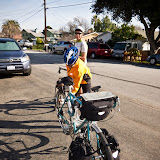
This year's Tour of the Alps qualifier was originally planned to be a tougher than normal trip. Unfortunately, I caught a flu a couple of weeks ago, and was still coughing on Saturday, so I had to switch to an easier route, going up Montebello Road. Present was Phil Sung, Li Moore, and Shasta Mike. Eva Silverstein joined us for the day. Yoyo Zhou was going to meet us at the Stevens Creek county park parking lot, but due to various reasons, ended up being late so decided to climb Page Mill road to meet us instead. Montebello road was gorgeous, with just a few high clouds. The dirt road was solidly packed and we had nice views of San Francisco from the summit.
 |
| From Alps 2011 Qualifier |
At Page Mill road, we finally met up with Yoyo, and went on down West Alpine road after crossing Skyline and running into a few Western Wheelers on the LDT Pescadero ride. The views were so clear that we could see all the way to Monterey's Big Sur mountain range!
 |
| From Alps 2011 Qualifier |
In Pescadero, we stopped at the goat farm, but the kids were only 2 weeks old so we were asked to refrain from petting them. At Norm's market, we had lunch made out of the wonderful artichoke-garlic bread, and then bought groceries for dinner, as Catherine, Li's wife, showed up just in time to carry all that in her car!
 |
| From Alps 2011 Qualifier |
At Pigeon Point, with 6 of us we booked up 3 hot tub slots, which enabled each of us to sit in a hot tub for nearly an hour each. Since this was my first long ride in a couple of weeks I was very grateful to be able to do so.
We woke up on Sunday to wet roads and drizzle. After a nice and hot breakfast we left the hostel with a 15mph tailwind which blew us right to Pescadero without us even noticing it! Noting that this tailwind would be a headwind in the valley, we eschewed the usual stage + tunitas creek ascent in favor of retracing our route back over Page Mill road. Yoyo and Phil decided they had had enough of the rain and decided to wait for Catherine and Li with their station wagon with 4 bike racks which was more than sufficient SAG.
Once we'd left Pescadero, however, the rain stopped and we had a gorgeous climb along Pescadero creek, which was overflowing with water from the night before. It was gorgeous and I was sorry that neither Phil nor Yoyo had a chance to see it. By the time we started up West Alpine all the rain was gone because we had a beautiful tree cover under the shade of the Redwoods with a roaring stream next to us. You could not ask for a prettier ride.
 |
| From Alps 2011 Qualifier |
By the time we got to Page Mill road's descents, the pavement was nearly dry and we could take the road at nearly full speed, subject to moisture on the rims and a few wet spots under tree cover. We stopped at Moody road so I could document how little rubber I had on my brake pads so I could justify new Kool-Stop Salmon brake pads.
 |
| From Alps 2011 Qualifier |
We then took the shortest route home, which got us home around 1:15pm, surprising XiaoQin, who had not expected us until 3:00pm at the earliest. What a great ride, with a great group of people.
Friday, March 04, 2011
Review: Prador Moon
Prador Moon is set in Neal Asher's polity universe. If you're familiar with Iain Banks' Culture, you can view the polity universe as the culture at age 5. The AIs have taken over control and command of that universe, but humans still get to do things, like pretend to be ambassadors or fight.
Prador Moon is set before the sequence of other Polity novels. Those novels refer to a war with the Prador, crab-like creatures who happened to find humans tasty. This novel describes how the war started, and describes the Polity in its state of frantically trying to get up to speed on fighting the Prador. As you might expect, there's lots of violence, loud explosions, and a couple of plots that while interesting, really are side-shows to the main storyline.
There are two main characters in the novel, and the threads that weave them together are tenuous and separated by quite a bit of time. As a result, the novel feels a bit like a skeletal outline in some spots, as the author desperately jumps large time sequences to sync up the two plot-lines. The technical gobbledy-gook is well down, but again nothing like Aliaster Reynolds here. The author knows what you're here for, and it's big loud explosions and space battles with bad guys.
Barely recommended for a brainless read while you're recovering from flu and can't handle anything heavier.
is set in Neal Asher's polity universe. If you're familiar with Iain Banks' Culture, you can view the polity universe as the culture at age 5. The AIs have taken over control and command of that universe, but humans still get to do things, like pretend to be ambassadors or fight.Prador Moon is set before the sequence of other Polity novels. Those novels refer to a war with the Prador, crab-like creatures who happened to find humans tasty. This novel describes how the war started, and describes the Polity in its state of frantically trying to get up to speed on fighting the Prador. As you might expect, there's lots of violence, loud explosions, and a couple of plots that while interesting, really are side-shows to the main storyline.
There are two main characters in the novel, and the threads that weave them together are tenuous and separated by quite a bit of time. As a result, the novel feels a bit like a skeletal outline in some spots, as the author desperately jumps large time sequences to sync up the two plot-lines. The technical gobbledy-gook is well down, but again nothing like Aliaster Reynolds here. The author knows what you're here for, and it's big loud explosions and space battles with bad guys.
Barely recommended for a brainless read while you're recovering from flu and can't handle anything heavier.
Thursday, March 03, 2011
Engineer's Guide goes to the Kindle store!
Many people have asked me why I don't sell my books in the Kindle store. Most readers don't know how onerous the terms are. For any books over $9.99, the Kindle store wants 70% of the proceeds. For books between $2.99 and $9.99, the Kindle store wants only 30% of the proceeds. What it means is that the $9.99 cover price and the $24.95 cover price nets the same profits, so I was unwilling to sell my books at the Kindle store for that reason.
However, now that I've got a second edition of the book out, I'm selling the first edition at the Kindle store for $9.99. My guess is that most people would prefer the second edition (when you're negotiating compensation, the extra $15 is easily justified by the improved second edition). However, if you're a poor student or just want to buy the book for someone as a gift and are cheap, well, the Kindle 1st edition is easy and convenient.
Wednesday, March 02, 2011
Cupertino Bike Shop is now carrying "Independent Cycle Touring"
Cupertino Bike Shop has started carrying Independent Cycle Touring, my book about bicycle touring. This is the first time any of my books has been carried by a retailer, so if you've been curious about it and want to see the book in person before buying, do drop by. Tell Vance I said "Hello!"
Thanks, Vance, for taking a chance on an unknown!
Thanks, Vance, for taking a chance on an unknown!
Engineer's Guide goes to 2nd Edition!
An Engineer's Guide to Silicon Valley Startups has been doing so well that it's nearly sold through it's 3rd printing. Since I'd learned a lot about negotiating since I first wrote the book in February 2008, I decided it was time for a 2nd edition. Tom Galloway kindly offered to copy-edit the entire second edition, so I took him up on the offer after adding additional material. Note that while I was able to include 2 case studies on negotiation, I could not include the big counter-offer I helped to negotiate last summer: understandably, the engineer in question was not comfortable with letting the public know about how that deal went down.
I've sent everyone who ordered the first edition in the last month an updated copy of the second edition of the book (in electronic format), and at this point, if you're entitled to an updated copy please let me know. (If you've contributed substantive comments on the book, you're entitled to an updated copy, for instance, or if you paid for the lifetime subscription to the book back when it was a kickstarter project, you're entitled to updates for the rest of your life)
I have less than 5 copies of the first edition of the book available for sale at a discount. Click here to buy.
I'm also currently experimenting with E-junkie for digital fulfillment of the book, which means that you're no longer subject to slow response times for digital orders. If that works out I'll switch to them permanently.
I've sent everyone who ordered the first edition in the last month an updated copy of the second edition of the book (in electronic format), and at this point, if you're entitled to an updated copy please let me know. (If you've contributed substantive comments on the book, you're entitled to an updated copy, for instance, or if you paid for the lifetime subscription to the book back when it was a kickstarter project, you're entitled to updates for the rest of your life)
I have less than 5 copies of the first edition of the book available for sale at a discount. Click here to buy.
I'm also currently experimenting with E-junkie for digital fulfillment of the book, which means that you're no longer subject to slow response times for digital orders. If that works out I'll switch to them permanently.
Subscribe to:
Comments (Atom)


