Auto Ads by Adsense

Booking.com

Sunday, March 06, 2011

Alps 2011 Pigeon Point Qualifier

From Screen Captures


Alps 2011 Qualifier

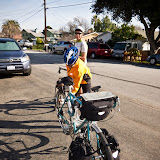
This year's Tour of the Alps qualifier was originally planned to be a tougher than normal trip. Unfortunately, I caught a flu a couple of weeks ago, and was still coughing on Saturday, so I had to switch to an easier route, going up Montebello Road. Present was Phil Sung, Li Moore, and Shasta Mike. Eva Silverstein joined us for the day. Yoyo Zhou was going to meet us at the Stevens Creek county park parking lot, but due to various reasons, ended up being late so decided to climb Page Mill road to meet us instead. Montebello road was gorgeous, with just a few high clouds. The dirt road was solidly packed and we had nice views of San Francisco from the summit.
From Alps 2011 Qualifier

At Page Mill road, we finally met up with Yoyo, and went on down West Alpine road after crossing Skyline and running into a few Western Wheelers on the LDT Pescadero ride. The views were so clear that we could see all the way to Monterey's Big Sur mountain range!
From Alps 2011 Qualifier

In Pescadero, we stopped at the goat farm, but the kids were only 2 weeks old so we were asked to refrain from petting them. At Norm's market, we had lunch made out of the wonderful artichoke-garlic bread, and then bought groceries for dinner, as Catherine, Li's wife, showed up just in time to carry all that in her car!
From Alps 2011 Qualifier

At Pigeon Point, with 6 of us we booked up 3 hot tub slots, which enabled each of us to sit in a hot tub for nearly an hour each. Since this was my first long ride in a couple of weeks I was very grateful to be able to do so.

We woke up on Sunday to wet roads and drizzle. After a nice and hot breakfast we left the hostel with a 15mph tailwind which blew us right to Pescadero without us even noticing it! Noting that this tailwind would be a headwind in the valley, we eschewed the usual stage + tunitas creek ascent in favor of retracing our route back over Page Mill road. Yoyo and Phil decided they had had enough of the rain and decided to wait for Catherine and Li with their station wagon with 4 bike racks which was more than sufficient SAG.

Once we'd left Pescadero, however, the rain stopped and we had a gorgeous climb along Pescadero creek, which was overflowing with water from the night before. It was gorgeous and I was sorry that neither Phil nor Yoyo had a chance to see it. By the time we started up West Alpine all the rain was gone because we had a beautiful tree cover under the shade of the Redwoods with a roaring stream next to us. You could not ask for a prettier ride.
From Alps 2011 Qualifier

By the time we got to Page Mill road's descents, the pavement was nearly dry and we could take the road at nearly full speed, subject to moisture on the rims and a few wet spots under tree cover. We stopped at Moody road so I could document how little rubber I had on my brake pads so I could justify new Kool-Stop Salmon brake pads.
From Alps 2011 Qualifier

We then took the shortest route home, which got us home around 1:15pm, surprising XiaoQin, who had not expected us until 3:00pm at the earliest. What a great ride, with a great group of people.

Friday, March 04, 2011

Review: Prador Moon

Prador Moon is set in Neal Asher's polity universe. If you're familiar with Iain Banks' Culture, you can view the polity universe as the culture at age 5. The AIs have taken over control and command of that universe, but humans still get to do things, like pretend to be ambassadors or fight.

Prador Moon is set before the sequence of other Polity novels. Those novels refer to a war with the Prador, crab-like creatures who happened to find humans tasty. This novel describes how the war started, and describes the Polity in its state of frantically trying to get up to speed on fighting the Prador. As you might expect, there's lots of violence, loud explosions, and a couple of plots that while interesting, really are side-shows to the main storyline.

There are two main characters in the novel, and the threads that weave them together are tenuous and separated by quite a bit of time. As a result, the novel feels a bit like a skeletal outline in some spots, as the author desperately jumps large time sequences to sync up the two plot-lines. The technical gobbledy-gook is well down, but again nothing like Aliaster Reynolds here. The author knows what you're here for, and it's big loud explosions and space battles with bad guys.

Barely recommended for a brainless read while you're recovering from flu and can't handle anything heavier.

Thursday, March 03, 2011

Engineer's Guide goes to the Kindle store!


Many people have asked me why I don't sell my books in the Kindle store. Most readers don't know how onerous the terms are. For any books over $9.99, the Kindle store wants 70% of the proceeds. For books between $2.99 and $9.99, the Kindle store wants only 30% of the proceeds. What it means is that the $9.99 cover price and the $24.95 cover price nets the same profits, so I was unwilling to sell my books at the Kindle store for that reason.

However, now that I've got a second edition of the book out, I'm selling the first edition at the Kindle store for $9.99. My guess is that most people would prefer the second edition (when you're negotiating compensation, the extra $15 is easily justified by the improved second edition). However, if you're a poor student or just want to buy the book for someone as a gift and are cheap, well, the Kindle 1st edition is easy and convenient.

Wednesday, March 02, 2011

Cupertino Bike Shop is now carrying "Independent Cycle Touring"

Cupertino Bike Shop has started carrying Independent Cycle Touring, my book about bicycle touring. This is the first time any of my books has been carried by a retailer, so if you've been curious about it and want to see the book in person before buying, do drop by. Tell Vance I said "Hello!"

Thanks, Vance, for taking a chance on an unknown!

Engineer's Guide goes to 2nd Edition!

An Engineer's Guide to Silicon Valley Startups has been doing so well that it's nearly sold through it's 3rd printing. Since I'd learned a lot about negotiating since I first wrote the book in February 2008, I decided it was time for a 2nd edition. Tom Galloway kindly offered to copy-edit the entire second edition, so I took him up on the offer after adding additional material. Note that while I was able to include 2 case studies on negotiation, I could not include the big counter-offer I helped to negotiate last summer: understandably, the engineer in question was not comfortable with letting the public know about how that deal went down.

I've sent everyone who ordered the first edition in the last month an updated copy of the second edition of the book (in electronic format), and at this point, if you're entitled to an updated copy please let me know. (If you've contributed substantive comments on the book, you're entitled to an updated copy, for instance, or if you paid for the lifetime subscription to the book back when it was a kickstarter project, you're entitled to updates for the rest of your life)

I have less than 5 copies of the first edition of the book available for sale at a discount. Click here to buy.

I'm also currently experimenting with E-junkie for digital fulfillment of the book, which means that you're no longer subject to slow response times for digital orders. If that works out I'll switch to them permanently.

Sunday, February 27, 2011

Introducing my Consultancy Service

I've been helping people on various things, ranging from linking up their startups with potential employees, helping various people vet their ideas, to helping engineers negotiate their compensation. All of these activities are time consuming, and do take quite a bit of my time. At this point, I'm having to admit that unless I start charging people, all my time can easily be taken up by random interruptions.

Unfortunately, my hourly rate is not cheap. Nevertheless, given how much I've boosted people's offers, I can safely say that I could charge 10X my hourly rate and everyone I've helped would still come out ahead. Unlike books or generalists, I don't work in platitudes and generalities. In most cases, I tell people exactly what to say to their managers to get a better offer/counter-offer.

If you need someone to help you negotiate your compensation package, see what I can do for you!

Thursday, February 24, 2011

Review: The Skinner

The Skinner introduces us to Neal Asher's world of SpatterJay. While it has all the trappings of science fiction, there's actually very little science explained.

The central conceit of the world of Spatterjay is that it is a world driven by essentially one species, the leech. The leech incorporates a virus that when it infects a human, grants the human fast regeneration, growing immunity to wounds (as the viral fibers become incorporated into all parts of the human body), and eventually immortality. Such beings become nearly immortal, and if they live long enough, become very very strong.

The plot revolves around 3 people, Erlin who visited Spatterjay when she was younger and was the one who discovered and described the viral properties, Janer, who was once indentured to a hive mind of hornets (yes, in Asher's universe, the other intelligent species on earth is a hive mind of insects), and Sable Keech, a returned-from-the-dead ECS monitor (think super-cop) bent on avenging his death at the hands of the criminals who once ruled Spatterjay. Throw in some Prador (who were at war with humans some centuries ago), stir gently, mix in with plenty of explosions, war droids, and plenty of underwater action, and you've got all the makings of a thriller.

Is it a good thriller? Yes. The action never gets boring, and nearly all references in the book are made use of at some point or another, so you do have to pay attention so as not to miss anything. You have to like Asher's obsession with parasites and funky life cycles. If you enjoy Iain Banks' depiction of hyper-intelligent minds and droids, Asher's clearly got the same attitude down. The whole thing is a fun read, just don't probe too hard, expect the science to make sense, or wonder why a fully intelligent species could remain undiscovered to humans despite its ability to speak human speech.

Recommended as light reading on a plane.

Wednesday, February 16, 2011

Review: Peopleware

I've always considered Peopleware to be the best management book for technologists, and recently wanted to re-read it as preparation for working on my next book. Mysteriously, every copy I've ever bought of this book has been loaned out and never returned to me, so I was very happy to see that there's a Kindle Edition where a borrower cannot help but return it to me after two weeks. At $9.99, the Kindle edition is a bargain.

This book is about the sociology of projects, though it spends a lot of time about the physical environment that programmers find themselves in. For instance, there's a long section about putting together an ideal space for a small team, as well as railing about prevailing noise in the workspace and the current favorite solution, headphones and ipods:
During the 1960s, researchers...polled a group of computer science students and divided the students into two groups, those who liked to have music in the background while they worked (studied) and those who did not. Then they put half of each group together in a silent room, and the other half of each group in a different room equipped with earphones and a musical selection. Participants in both rooms were given a Fortran programming problem to work out from specification. To no one’s surprise, participants in the two rooms performed about the same in speed and accuracy of programming... The Cornell experiment, however, contained a hidden wild card. The specification required that an output data stream be formed through a series of manipulations on numbers in the input data stream... Although the specification never said it, the net effect of all the operations was that each output number was necessarily equal to its input... Of those who figured it out, the overwhelming majority came from the quiet room.
In other words, you're giving up significant creativity when you choose to ask engineers to put on headphones and listen to music in order to compensate for a noisy work environment. There's an explanation about why incentives such as "best quarter ever" doesn't work:
Throughout the upper ranks of the organization, there is marvelous ingenuity at work to be sure that each manager has a strong personal incentive to accept the corporate goals. Only at the bottom, where the real work is performed, does this ingenuity fail. There we count on “professionalism” and nothing else to assure that people are all pulling in the same direction. Lots of luck.
There's a long section about the importance of jelling a team, and how most managers do everything necessary in order to get the team not to jell (the authors call this "Teamicide"). What's fascinating to me is that the authors claim that they don't know how to get teams to jell, even though the book is full of examples as to how to make it happen! They do provide lots of counter-examples, however, about how certain behavior causes teams not to jell.

Finally, in the "new" segments of the book (new since 1999, so not that new), the authors discuss how upper management can encourage teamicide:
Here are some of the managerial actions that tend to produce teamicidal side effects: annual salary or merit reviews management by objectives (MBO) praise of certain workers for extraordinary accomplishment awards, prizes, bonuses tied to performance performance measurement in almost any form But hold on here, aren’t these the very things that managers spend much or even most of their time doing? Sadly, yes. And yet these actions are likely to be teamicidal.
Fundamentally, introducing competition disables the coaching process, and what happens then is that people no longer feel like a team. If your promotion package has to be better than everyone else in order for you to be promoted, then your best bet is to hoard knowledge and skills, rather than spreading it around.

There's a very cogent explanation about how the weekly status meeting is essentially a ceremony meant to boost the manager's ego, rather than something that's useful for a team. There's a good explanation of how trust is built and important to individual contributors' performance, and how increased quality is important to establish esprit de corps in a team. There's a lot of railing against fragmentation of people's time.

Do I have any criticism of this book? Yes. First of all, the authors have spent their careers entirely as consultants to large organizations. Many of the issues here don't exist in startups, for instance. I've never seen a startup with a large PA system that interrupts workers, nor have I seen one with a furniture police. The flip side of that is that the authors assume basic things that all managers should know and do, but judging by the quality of the average manager in Silicon Valley companies, is almost non-existent. There's insufficient analysis as to who should be a manager and who shouldn't. There's very little help these folks can give you as to how to hire and grow a balanced team. But seriously, there's no point criticizing this book for something the authors couldn't possibly have been expected to know.

At the end of this read, I still stand by my statement that this is still by far the best management book that an engineer or technical manager can read. Many large and growing companies I know could stand to distribute this book to every new manager. Needless to say, this book is highly recommended.

Tuesday, February 15, 2011

Piaw versus The Post Office

One of the consequences of being a self-publisher and self-distributor of books is that I'm continually running up against various weird limitations of the post office. Despite that, the post office is still the best service for a self-publisher:
  • It's relatively cheap. ($2.24 for Engineer's Guide and $4.95 for Independent Cycle Touring
  • Daily pick up from my mailbox, even on Saturdays. This is pretty cool.
  • An unlimited supply of free envelopes for Independent Cycle Touring. Having to pay for my own envelopes is one reason why I have to charge $3 to ship Engineer's Guide.
What's not so good is that Independent Cycle Touring is one pound to ship. Yes, between the large form factor, and full color pages, it's a heavy book in more than one sense of the word. That exceeds the 13 ounce limit, so I can't do what I did with Engineer's Guide and stick a stamp on it and leave it in the mailbox. In fact, the mailbox that came with my house wouldn't even fit the book! Fortunately, Pardo came by and replaced my tiny mailbox with a huge rural sized mailbox. Now I can ship 5-6 copies of Independent Cycle Touring at once, if I am ever so lucky as to get that many orders at once. The problem then is the 13 ounce limit: I once shipped a copy of Independent Cycle Touring in a flat-rate envelope with a flat-rate stamp, and it bounced right back. I took it to my local post office and the carrier there said that the only way to by-pass this problem is to use the USPS web-site to buy a printed shipping label. That also has the side-effect of being potentially cheaper to ship books, but I have to use up my supply of $4.95 stamps first, so that'll have to happen before I switch over entirely to on-line shipping labels. Note that I can't do that for non flat-rate envelopes, so I have to stick with buying stamps manually for Engineer's Guide. With all this, you would think that I'd be tempted to ship media mail, which gets a special rate for books. This doesn't work. For one thing, it's actually not any cheaper for Engineer's Guide, and for another, in the age of Amazon Prime, other self-publishers/self-distributors have reported that people complain when books take as long as a week or two to reach them. It's just easier to use first class mail and not have to deal with the customer complaints. Media mail also doesn't always bounce if the destination is mis-spelled or mis-named. Another strange thing with my two books. Engineer's Guide obviously gets a lot of technologically sophisticated customers. Not so with Independent Cycle Touring. I once got a call from a customer who thought he had ordered a book but when I checked my records, I had no sale record for him. It turned out that he did not actually realize that he had to click the "buy" button and then the "confirm buy" button after that on Google checkout. As a result, I'm going to have to put my phone # on the page for Independent Cycle Touring for people who need help ordering.

Little details like this is what makes fulfillment challenging. It really gives you respect for on-line retailers like Amazon who do this all the time for millions of customers.

Sunday, February 13, 2011

Review: The Victorian Internet

In addition to The Box, Paul Krugman also recommended The Victorian Internet, which is an account of the invention of the telegraph and the follow-on consequences.

This turned out to be a very fun read, and Tom Standage draws very appropriate comparisons between the telegraph (which heralded the true dawn of the information age) and today's internet. Interestingly enough, for instance, the telegraph was invented simultaneously by two people on opposite sites of the Atlantic, Samuel Morse and William Cooke. While both systems worked more or less similarly, Morse's superior user interface won wide-spread adoption and he became by far the more famous of the two inventors. Sounds like a familiar story, right?

It gets better. Standage continues to expound on the laying of the first transatlantic cable, complete with cable cuts, funding fiascos, as well as the initial design deficiencies which caused it to fail almost right away. He then describes the community of telegraph operators that grew around the telegraph, telegraphic romances, crimes, and common mis-understandings of the technology which obviously parallel what we see today on the internet.

All in all, a short and enjoyable book, and very much worth your time. Recommended.

Thursday, February 10, 2011

The High Costs of Distribution

Occasionally, someone will ask me why I only sell on my web-site. The answer is that distribution is expensive. In particular, my first book, An Engineer's Guide to Silicon Valley Startups is pitched at a niche audience, and one that's likely to be internet savvy. Giving 50% of my revenue to Amazon is unlikely to draw me any additional sales or reach additional audiences.

My second book, Independent Cycle Touring, however, is aimed at cyclists, potentially a much less internet savvy audience. This is a book that really could be distributed to bike shops and book stores, so I approached a local bike shop with a sample to see if he would be interested in carrying it. The owner thought that he could sell a handful of this book every year. Then he asked for a whole sale discount, 40% off the cover price. That effectively lops a whopping 60% off my profit margins! Then he gave me the name of a distributor who could distribute my book to all bike shops in Northern California. Guess what, he wanted 60% off the cover price, reducing my profit to $1/book. At that price, it's not even worth writing the book unless I could sell thousands of copies a year. I suppose I could raise the cover price, but that would only reduce sales further. And note that these are sales to bike shops, which don't return books (unlikely the retail book trade). Those really aren't worth thinking about.

So for the foreseeable future, I'm going to keep selling the book off my web-site, and at local events like the upcoming Sports Basement talk.

Incidentally, I recently sold two copies of Engineer's Guide to the Midwest Library Service, meaning that some library, somewhere, received a request to stock my book. If you want to read my book but can't afford it, try asking your local library to acquire it. I am perfectly happy to handle library sales, and the guys over at MLS even send me a check up front rather than making me navigate the Purchase Order process. Now that's author friendly.

Wednesday, February 09, 2011

Review: The Box

If you do any sailing on San Francisco Bay, you'll see container ships. Giant ships stacked with containers coming in full and leaving empty. (After all, nothing's ever made in America any more) If you've ever wondered how the logistics worked, or how the standard container was designed and evolved, then The Box: How the Shipping Container Made the World Smaller and the World Economy Bigger is the book for you.

What's fascinating for me is that the idea of the container was effectively invented by one man, Malcolm McLean, and he effectively championed and promoted it through his company which he started for the purposes of promoting this idea. The book describes all the implications of this, including how the Vietnam War effectively sold the military on containers, and thereby enabled the trans-Pacific routes that I see today on San Francisco Bay --- container ships would get to Vietnam full, and then have to return to the US empty, and McLean saw that if he made a stop in Japan, he could fill up the ships and make more money.

What's disappointing about the book is that the author could not manage to compute the drop in costs that could be attributed to container adoption. Nevertheless, the entire story is fascinating, and well worth the time. Recommended.
(Thanks to Paul Krugman for recommending the book over at his blog)

Monday, February 07, 2011

Setting up a Proxy Server on Windows

If you've ever traveled outside the US, you know what a pain that is to access certain web-sites. In particular, lots of web-sites have country-restricts which prevent you from accessing them outside the USA. The solution is to run a proxy-server in the US while you're going to be traveling. There's probably a ton of information out there on how to do this if you're a Linux/Mac user (both of them can run standard UNIX proxy servers), but I haven't seen anything on how to do this on Windows, so here's my stab at it, having recently ran a proxy for a friend of mine in Canada.

My main criteria was that the proxy software be free, as in free beer. I couldn't be bothered to download and compile anything for this exercise.

  1. Download CCProxy. There are alternatives, but none of them are easily configured, and most of them just simply broken or have onerous licensing requirements. CCProxy is all you will need for personal use. If you need more users, then you'll have to pay up or compile some open source software.
  2. Open up a browser to your router's administration page. This will usually be 192.168.1.1. You can now navigate to Applications & Gaming screen, and set it up so it looks like the following:
    From Drop Box

  3. Now look up the static IP of your router. This is usually on the "Status" page of the router's administration application.
  4. Configure the client. I tell people to run Firefox, since it has a separate proxy configuration dialog box. Visit tools->options, select the "Network" tab, and click "Settings." Now turn on "Manual Proxy Configuration", and use the static IP address you got previously. Hit OK until you're finished.
    From Drop Box

  5. You are now all done!

Talk at Sports Basement, March 22nd

For those of you who have thought about getting a copy of Independent Cycle Touring but have hesitated because you would rather see a copy of the book in person, there'll be an opportunity to do so at the Sports Basement in Sunnyvale on March 22nd, from 6-8:30pm. I'll give a talk in about 45 minutes about the book and some topics it covers, and then leave some time for questions, book sales, and a signing.

If you're attending, please use the Facebook Event to sign up! You can also it!

I'm also working with REI for a talk later on in the year, and will try to make various other events happen. In general, if you would like to host me for a speaking engagement, please send me e-mail.

Friday, February 04, 2011

Review: Shadow of the Scorpian

Shadow of the Scorpion is a prequel to Gridlinked, starring Ian Cormac, the unbelievably competent ECS agent of the prior novel.

The novel is short and an easy read, and composes of two threads: Cormac's childhood, and his initiation into the military, where he's quickly involved in quashing a separatist movement. In this novel, he's still not quite believable, but does at least make mistakes. The thread from Cormac's childhood is pretty irrelevant. We get a set up, and there's this build up about his memories having been edited, but the payoff just wasn't there and was quite a bit of a let down.

The main thread is characteristic Asher. Lots of big explosions, violence, and cool weapons. It's a fun read for an airplane ride, but don't consider it anything deeper. Mildly recommended.

Sunday, January 30, 2011

Trip Report: Cozumel/Carmen de Playa

Cozumel
Matt Vera's Photos

I just got back from a mostly diving trip in Cozumel/Carmen de Playa. I'm not as avid a diver as I am a sailor, cyclist or backpacking, and would never undertake a diving vacation except that my attempt to organize a sailing trip in the Caribbean completely fell through! Unlike diving, cycling, or backpacking, sailing requires a full crew to make full use of the boat (to split costs), and I'm also not so competent a sailor that I can sail a boat short-handed or single-handed.

Arturo told me about the new Virgin America direct flights to Cancun with the special promotional pricing, and given that he'd already done all the research necessary on the area for a previous trip, I went about organizing a dive trip. Matt Vera, Tracy Ng, and Zaheda Bhorat chose to join me on this outing. Matt and Tracy wanted to complete a dive certification course, while Zaheda wanted to relax.

We signed up for the 5-night/3 days package at Scuba Club Cozumel. At $100/night for 5 nights including food + three 2-tank boat dives, Scuba Club Cozumel is a fantastic deal. The food was wonderful as well, and I consider it money well spent. The diving was very similar to the rest of the Caribbean, so nothing to write home about, except for the Wreck of the Felipe Xicotencatl, which was absolutely the best dive I did at the dive club. As a relatively new wreck, you get to explore all the rooms inside, and experience what it's like to be a wreck diver, wich close quarters maneuvers. This is a technically challenging dive and well worth the effort.

The club is full of avid divers, the kind of people who own their own dive equipment and do 100+ dives a year, so there's not much emphasis on much except diving. The equipment rental is expensive, but since you'll be doing so much diving, things like dive computers are a necessity. Matt and Tracy rented dive computers from the Bay Area, but both of those broke, while the one I rented from the Scuba Club had no problem.

Then we moved to Carmen del Playa to do 2 dives in the cenotes with Pluto Dive. These guys were picked because they were the only folks who ever responded to e-mail in Carmen del Playa. The dives in the cenotes were amazing. You basically jump into a freshwater cave and swim down into the caverns. This is like spelunking but without the scrapes and bruises and squeezing around things. With neutral buoyancy you basically float through the caves shining your flash-light at stalactites and stalagmites, seeing the glorious insides of the caves. At one point, we emerged into an underground cave with just a few air-holes, and could see fossils of tree roots on the ceiling (as well as other fossils), and could see the roots of trees coming through. Unfortunately my camera flooded just before the wreck dive, so you'll have to wait for Tracy and Matt's photos. The water was also the clearest I had ever seen. The transition from freshwater into salt water has to be experienced to be believed! Up until the cenotes dive I didn't think I would return to Cancun, as the diving wasn't any better than what I had seen in the rest of the Caribbean, but having seen the cenotes dive, I could see myself coming for more. These two dives were definitely the best dives I had done. Given that round-trip flights to Cancun are currently $150 or so, I recommend you do something about it before Virgin America's big discounts are gone.

We visited Chichen Itza on our last full day. The long bus ride (5 hours!!) was no fun, and while the ruins were cool (hey, virgin sacrifices... ball games to the death, hearts that get cut out of enemies and then sacrificed to serpent gods --- you just can't make this stuff up!), I thought I could probably get as much out of reading the Wikipedia page. I guess I'm just not cut out for cultural explorations. Worth going to once, but I won't do it again.

Carmen del Playa's beaches are very touristy, and they are nice, but not as nice as what I saw in the Virgin Islands. I definitely think that the Virgin Islands is still the best of the Caribbean, and recommend a trip there instead, especially for those who are sailors. But all in all I had a good time, and will consider returning to do more cenotes diving.

Pengtoh Has Started Blogging

Pengtoh has started blogging, and on a very consistent basis. This is great to see. For those of you who don't know, Pengtoh was the smartest person I knew in college, and being his roommate for one semester must have raised my IQ by at least 10%. Amongst other things, he:
  • Fixed his car's radiator with chewing gum.
  • Modded his Amiga's motherboard to fix a broken chip, and while he was at it, set it up so he could reboot without dropping the modem connection.
  • Bought a Sun 3, and fixed a fuse problem with a penny.
It's also no wonder that when he joined Google he quickly did some pretty amazing things. I was really sad to lose him at Google when he retired (partially due to certain political situations that sadly, are still not fixed at Google today). But now you can get an almost daily dose of smartness from his blog. Read it and learn! Incidentally, the other smart undergrads from my years at Cal (in no particular order) were Steve Yen, Joe Chung, Jon Blow, Insik Rhee, David Lofteness, John Mitchell, Larry Hosken, Jimmy Leftkowitz and Dan Wallach. I'm sure there are many others I'd forgotten, but it's gratifying to see how many of us have done well over the years.

Review: Dollhouse Season 2

My complaints about the first season of dollhouse was due to how slow the plot was, and how nobody had ever seemed to have heard of off-site backups. One thing about Joss Whedon, at least he's consistent in his plot holes.

The second season starts out far more promising. The story accelerates, and we get development of the main character, Echo, as well as an understanding of where Rossum's technology is leading. After all, if you did invent a machine that could wipe people clean and then reprogram them to be whatever you wanted to be, the natural thought wouldn't be to start a high class prostitution ring: you'd go after bigger targets.

Unfortunately, after that story point was resolved, we get deep inside Rossum's past, and the entire plot at that point develops holes you can drive an armored 18-wheeler through. The villains were smart enough to discover the neuroscience behind the dollhouse, but stupid enough to come up with a complex series of schemes that required that they put themselves in harm's way to get what they wanted, rather than pursue their goals directly. The net result of this was a plot that required characters to do incredibly unreasonable things. The penultimate episode was really dumb, in the "Oh, we'll blow up entire buildings to remove this dangerous technology" fashion. At least we know that doesn't work (thanks to the ending of Season One). However, we have to suspend our disbelief that the smart, intelligent characters in this show did believe that this would work! The post-apocalyptic section of the story doesn't make sense as well. Wouldn't the masters of the universe rather keep a high tech world intact so they could live in luxury?

The last episode was even more inane. One of the smart characters designed a device to restore the world, but isn't smart enough to put together a timed trigger. Even worse, the "leader" character in the story doesn't think to herself, "If anything goes wrong we need this guy to fix it, we can't let him blow himself up!"

Ok, good things about the series: it's got the best depiction of nerd love I've seen, very sweet and almost believable. Some of the exploitation of the technology seen in the last episode stems directly from the premise. It would be fun to explore that aspect of the world. Unfortunately, I'm afraid I cannot recommend this series to anyone, even fans of Joss Whedon. I'm afraid my opinion of his work dropped dramatically after watching this series. I'm starting to think
that Buffy was a fluke, and he's been coasting on his reputation since. Not Recommended.

Saturday, January 29, 2011

Review: Writing Fiction for Dummies

Disclaimer: I got my copy of Writing Fiction For Dummies for free as a Kindle e-book giveaway.

I was very pleasantly surprised by this book. While there are other books such as Stephen King's On Writing that can be inspirational, these books tend to focus on what a writer thinks could work for him. Ingermanson and Economy, two published fiction authors, describe a wide range of writing techniques and styles that could work for various writers, and describe how each style could work for a certain kind of writer.

They further describe structure and plot in an easy to grasp fashion, breaking down well-known stories into the 3-act structure and describing books in terms of scenes. Examples are provided and very relevant and cogent. Each scene is then analyzed, and further broken down into different types. Styles of narration, including a description of why you might want to use first person, third person, omniscient, etc. narratives are also covered.

Finally, the art of selling your novel is also described. There's a huge emphasis on going to writing conferences to pitch your novel in person, but there's also lots of detail about how to write a proposal, story summary, and pitch. They describe how to get agents to look at your book, and what to do as a first time author.

I am undecided as to whether I will attempt a novel this year (my next book is almost certainly not a novel), but if I do, I expect to go back to this book and use it extensively while writing. Recommended.

Review: The Party - The Secret World of China

Westerners tend to have a very un-nuanced view of China. For instance, when Burton Malkiel came back from China, he was over-flowing with enthusiasm for China, complete with starting up a new fund, and taking all the signs of economic development that he saw there as a sign that capitalism had taken over China in a big way, and conflating capitalism with democracy in the way that only naive Westerners do. He was not completely wrong, but he was missing all the nuances that those of us who grew up in Asia saw.

When Steve Grimm reviewed: The Party: The Secret World of China's Communist Rulers, I checked it out from the library since it promised to be a book that was not about the naive-un-nuanced view of China so often touted breathlessly in newspapers and magazines.

I was not disappointed. All the stories are there. The story behind the poisoned milk fiasco? It's there, and yes, it's tied to the 2008 Olympics in a way you might not expect. I wonder if the IOC ever considers that it has blood on its hands when it agrees to host the Olympics in places where there is not a long history of democracy and human rights. The fact that Baidu offers companies a chance to censor its search results are also covered. The Great Leap Forward and its cover-up? Documented in detail here. Why was reunification with Taiwan so hot a topic in the late 1990s/early 2000s and then now is almost never on the radar? Documented here, with all the subtle details that many Westerners over-look. Corruption and graft? All here. The story behind why Shanghai's skyline was completely rebuilt? Someone I know recently posted that she could not see any buildings in common between 1980 and now in Shanghai from a picture of the Skyline --- she naively attributed that to rapid economic development. The reality is far different and explained here in detail.

I grew up in Singapore, and saw first-hand how capitalism does not automatically lead to democracy, even though it can and does lift people out of poverty, which is in general a good thing. It's always annoyed me that Westerners (ABCs included) conflate economic freedom with liberty, without realizing that there's a second model at work in Asia, where economic freedom comes with strings attached. When Google went to China, I deliberately kept myself out of that effort. When Google left China, many people I know thought that it was a bad move. I personally applauded it as a willingness to stand by principle, with a nuanced understanding of the what's going on there that only Sergey Brin, with his experience growing up in a totalitarian regime, could have made happen.

All in all, I consider this a very important book. If you're a naive Westerner or ABC, you owe it to yourself to read this book carefully before visiting China and taking everything you see at face value. While I agree with Brad Delong that we do not want to go down in history as trying to prevent the lifting of millions out of poverty, especially in Asia/China, I think a good understanding of this book will lead you to realize what a Faustian bargain international trade is, and you will eventually come to agree with Dani Rodrik's view as expressed in One Economics, Many Recipes:
Think of labor and environmental standards, for example. Poor countries argue that they cannot afford to have the same stringent standards in these areas as the advanced countries... Democratic countries such as India and Brazil can legitimately argue that their practices are consistent with the wishes of their own citizens, and that therefore it is inappropriate for labor groups or NGOs in advacned countries to tell them what standard they should have... But non-democratic countries such as China, do not pass the same prima facie test. The assertion that labor rights and the environment are trampled for the benefit of commercial advantage cannot be as easily dismissed in those countries. Consequently, exports of nondemocratic countries deserve greater scrutiny when they entail costly dislocations or adverse distributional consequences in importing questions.

Needless to say, this book is highly recommended. Well worth paying full price for.